
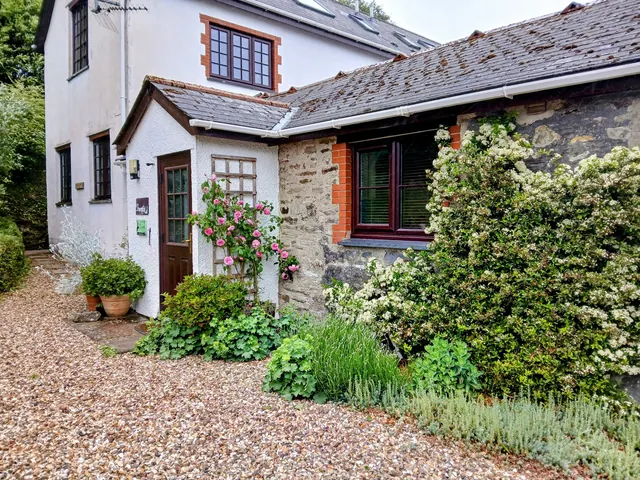
Dulverton is known as the southern gateway to Exmoor and is also home to the head quarters of the Exmoor National Park. There are several streets of shops in Dulverton including a butcher, bank, Post Office, fish & chip shop, greengrocer, late-opening supermarket, art gallery, hairdressers, guns and fishing tackle shop. There are also a number of quality boutiques, interesting gift shops plus a handful of lovely restaurants, tea rooms and pub.
Please find below a selection of self catering holiday cottages to rent in or near Dulverton.
Dulverton sits at the southern edge of Exmoor in west Somerset, a short way from the Devon border, in the steep wooded valley where the River Barle runs down to meet the Exe a little below the town. It is the moor’s traditional southern gateway, recorded in the Domesday Book of 1086 as Dolvertune and once busy with woollen mills strung out along the water, the earliest of them noted as far back as the sixteenth century. The mills have gone, but it still works for its living: independent shops, butchers and galleries trade along the one main street, an indoor market fills the Town Hall three times a week, and a farmers’ market gathers Exmoor’s producers in the Lion Stables yard on the last Saturday of the month from April to September.
It reads, more or less, as a single sloping street with a handful of pubs and tea rooms and the medieval bridge over the Barle at its foot. Above the rooftops the Iron Age hillforts of Oldberry, Mounsey and Brewer’s Castle ring the valley, evidence that people have held this crossing for the best part of two thousand years. The open moor begins within a mile or two of the last house.
Our self-catering cottages in and around Dulverton run from converted chapels and stone terraces in the centre of town to detached houses set above the river and in the quieter villages a few miles out, such as Brushford and Winsford. Many of them are dog-friendly, and most are a few steps from a riverside footpath and a short walk into the square for the morning paper.
Dulverton has long been the way onto the moor from the south, reached on the B3222 off the A396 that climbs north from Tiverton. It makes a natural base for a week. Tiverton lies about thirteen miles off by road and Taunton around twenty-five, with the coast at Minehead some nineteen miles north over the moor, so the high ground, the wooded combes and the sea are all within an afternoon’s reach. The town stands where the Barle and the Exe close in, both rivers running clear and fast over gravel, and the Barle itself is a Site of Special Scientific Interest, the prime salmon spawning water of the whole Exe system. Members of the Dulverton Angling Association fish its beats for wild brown trout, grayling and the occasional sea trout through the season.
All Saints’ stands just above Bank Square, its grey west tower surviving from the fifteenth-century church while the body of the building was rebuilt between 1853 and 1855 by Edward Ashworth; it is listed Grade II*. Around it the town keeps more than forty independent shops, among them the Tantivy, a long-established family-run deli and coffee lounge, alongside butchers, galleries and outdoor outfitters.
The five-arched stone bridge over the Barle at the foot of the town is the oldest medieval bridge on Exmoor. A tablet set into the parapet records its repair in 1624 and its widening by John Stone in 1819, and it still carries the road across pointed arches and cutwater buttresses worn smooth by centuries of flood. A little upstream stands Exmoor House, built as the Dulverton Union workhouse in 1854 to a design by Edward Ashworth and, since 1974, the headquarters of the Exmoor National Park Authority, with a small gallery and changing exhibitions open to visitors.
There are good places to eat and drink within a few minutes’ walk of one another. Woods, in Bank Square, is a much-garlanded wine bar and restaurant, while the Bridge Inn, down by the river on Bridge Street, is the kind of pub where the ales and the modern British cooking draw walkers in off the moor. The Tantivy serves barista coffee and a light lunch through the day, and several tea rooms keep the older trade of a market town going.
Some of the best walking starts at the bridge, no car needed. The fifty-two-mile Exe Valley Way, which runs from the Exe estuary up to Exford and passes through Tiverton, Bampton and Dulverton on the way, gives you the river under your feet for as far as you care to go, and the riverside paths along the Barle lead out of town in both directions, level and shaded under the trees. For higher, wilder ground, Winsford Hill rises to around 1,400 feet a few miles north, its commons grazed by free-roaming Exmoor ponies and carrying the sixth-century Caratacus Stone beneath its little shelter; the long-distance Two Moors Way crosses the moor by way of Tarr Steps not far off.
About four miles north-west of the town the River Barle is crossed by Tarr Steps, the longest clapper bridge in Britain: seventeen spans of unmortared stone slabs, some weighing a ton or more, laid flat across the water and assessed in its listing as medieval in origin. The bridge sits within Tarr Steps Woodland National Nature Reserve, a thirty-odd-hectare valley of sessile oak hung with mosses, liverworts and lichens that thrive in the cool, damp air off the river. It is a short drive from town, with a car park and a seasonal tea room by the bridge. From there a circular walk back along the Barle, with the water sliding over rock beside you the whole way, is one of the best half-days on Exmoor.
Exmoor was named Europe’s first International Dark Sky Reserve in 2011, and away from the town’s few streetlights the night sky is genuinely dark, the Milky Way clear overhead on a still winter evening. On the first Sunday of December Dulverton marks the season with its Starlight evening, a free afternoon and evening when Christmas trees lit with white lights line the streets, the independent shops stay open late, and the day winds up with carols around the tree in Bank Square and a fireworks finale over the roof of All Saints’.
Beyond Dulverton, the rest of Exmoor lies open to explore, from the high moor at Dunkery Beacon to the cliffs above Lynmouth and the harbour at Porlock Weir. Browse our full collection of Exmoor cottages to find the right place to stay.
| Add dates to show prices | view |
Pets
| Add dates to show prices | view |
Pets
| Add dates to show prices | view |
Pets
| Add dates to show prices | view |
Pets
| Add dates to show prices | view |
Dulverton sits at the southern edge of Exmoor in west Somerset, a short way from the Devon border, in the steep wooded valley where the River Barle runs down to meet the Exe a little below the town. It is the moor’s traditional southern gateway, recorded in the Domesday Book of 1086 as Dolvertune and once busy with woollen mills strung out along the water, the earliest of them noted as far back as the sixteenth century. The mills have gone, but it still works for its living: independent shops, butchers and galleries trade along the one main street, an indoor market fills the Town Hall three times a week, and a farmers’ market gathers Exmoor’s producers in the Lion Stables yard on the last Saturday of the month from April to September.
It reads, more or less, as a single sloping street with a handful of pubs and tea rooms and the medieval bridge over the Barle at its foot. Above the rooftops the Iron Age hillforts of Oldberry, Mounsey and Brewer’s Castle ring the valley, evidence that people have held this crossing for the best part of two thousand years. The open moor begins within a mile or two of the last house.
Our self-catering cottages in and around Dulverton run from converted chapels and stone terraces in the centre of town to detached houses set above the river and in the quieter villages a few miles out, such as Brushford and Winsford. Many of them are dog-friendly, and most are a few steps from a riverside footpath and a short walk into the square for the morning paper.
Dulverton has long been the way onto the moor from the south, reached on the B3222 off the A396 that climbs north from Tiverton. It makes a natural base for a week. Tiverton lies about thirteen miles off by road and Taunton around twenty-five, with the coast at Minehead some nineteen miles north over the moor, so the high ground, the wooded combes and the sea are all within an afternoon’s reach. The town stands where the Barle and the Exe close in, both rivers running clear and fast over gravel, and the Barle itself is a Site of Special Scientific Interest, the prime salmon spawning water of the whole Exe system. Members of the Dulverton Angling Association fish its beats for wild brown trout, grayling and the occasional sea trout through the season.
All Saints’ stands just above Bank Square, its grey west tower surviving from the fifteenth-century church while the body of the building was rebuilt between 1853 and 1855 by Edward Ashworth; it is listed Grade II*. Around it the town keeps more than forty independent shops, among them the Tantivy, a long-established family-run deli and coffee lounge, alongside butchers, galleries and outdoor outfitters.
The five-arched stone bridge over the Barle at the foot of the town is the oldest medieval bridge on Exmoor. A tablet set into the parapet records its repair in 1624 and its widening by John Stone in 1819, and it still carries the road across pointed arches and cutwater buttresses worn smooth by centuries of flood. A little upstream stands Exmoor House, built as the Dulverton Union workhouse in 1854 to a design by Edward Ashworth and, since 1974, the headquarters of the Exmoor National Park Authority, with a small gallery and changing exhibitions open to visitors.
There are good places to eat and drink within a few minutes’ walk of one another. Woods, in Bank Square, is a much-garlanded wine bar and restaurant, while the Bridge Inn, down by the river on Bridge Street, is the kind of pub where the ales and the modern British cooking draw walkers in off the moor. The Tantivy serves barista coffee and a light lunch through the day, and several tea rooms keep the older trade of a market town going.
Some of the best walking starts at the bridge, no car needed. The fifty-two-mile Exe Valley Way, which runs from the Exe estuary up to Exford and passes through Tiverton, Bampton and Dulverton on the way, gives you the river under your feet for as far as you care to go, and the riverside paths along the Barle lead out of town in both directions, level and shaded under the trees. For higher, wilder ground, Winsford Hill rises to around 1,400 feet a few miles north, its commons grazed by free-roaming Exmoor ponies and carrying the sixth-century Caratacus Stone beneath its little shelter; the long-distance Two Moors Way crosses the moor by way of Tarr Steps not far off.
About four miles north-west of the town the River Barle is crossed by Tarr Steps, the longest clapper bridge in Britain: seventeen spans of unmortared stone slabs, some weighing a ton or more, laid flat across the water and assessed in its listing as medieval in origin. The bridge sits within Tarr Steps Woodland National Nature Reserve, a thirty-odd-hectare valley of sessile oak hung with mosses, liverworts and lichens that thrive in the cool, damp air off the river. It is a short drive from town, with a car park and a seasonal tea room by the bridge. From there a circular walk back along the Barle, with the water sliding over rock beside you the whole way, is one of the best half-days on Exmoor.
Exmoor was named Europe’s first International Dark Sky Reserve in 2011, and away from the town’s few streetlights the night sky is genuinely dark, the Milky Way clear overhead on a still winter evening. On the first Sunday of December Dulverton marks the season with its Starlight evening, a free afternoon and evening when Christmas trees lit with white lights line the streets, the independent shops stay open late, and the day winds up with carols around the tree in Bank Square and a fireworks finale over the roof of All Saints’.
Beyond Dulverton, the rest of Exmoor lies open to explore, from the high moor at Dunkery Beacon to the cliffs above Lynmouth and the harbour at Porlock Weir. Browse our full collection of Exmoor cottages to find the right place to stay.
Clear selected dates